PROJECT
Entre Deux Feux
ROLE
Co-Creative Director / Curator
LOCATION
Gaz Town, Griffintown — Montréal
TIMELINE
2010 — 2014
SECTOR
Contemporary Art / Curatorial
— Scope
Curation · Spatial Design
Manifesto · Publication
Painting · Sculpture · Photography
Video · Installation
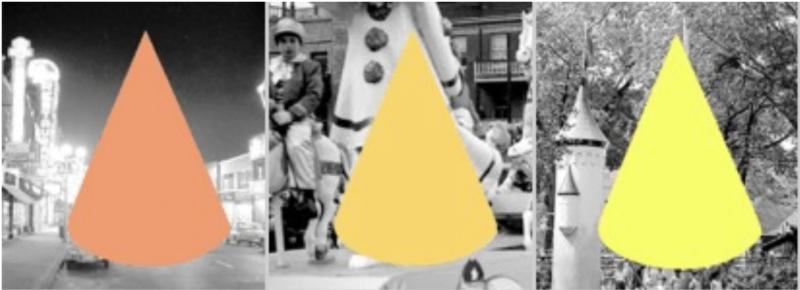
Between the fire of what was and the fire of what could be — there is the work.
— Entre Deux Feux Manifesto
01 — The Space
A Space Built From Nothing
— The Premise
Not a gallery show — an act of construction.
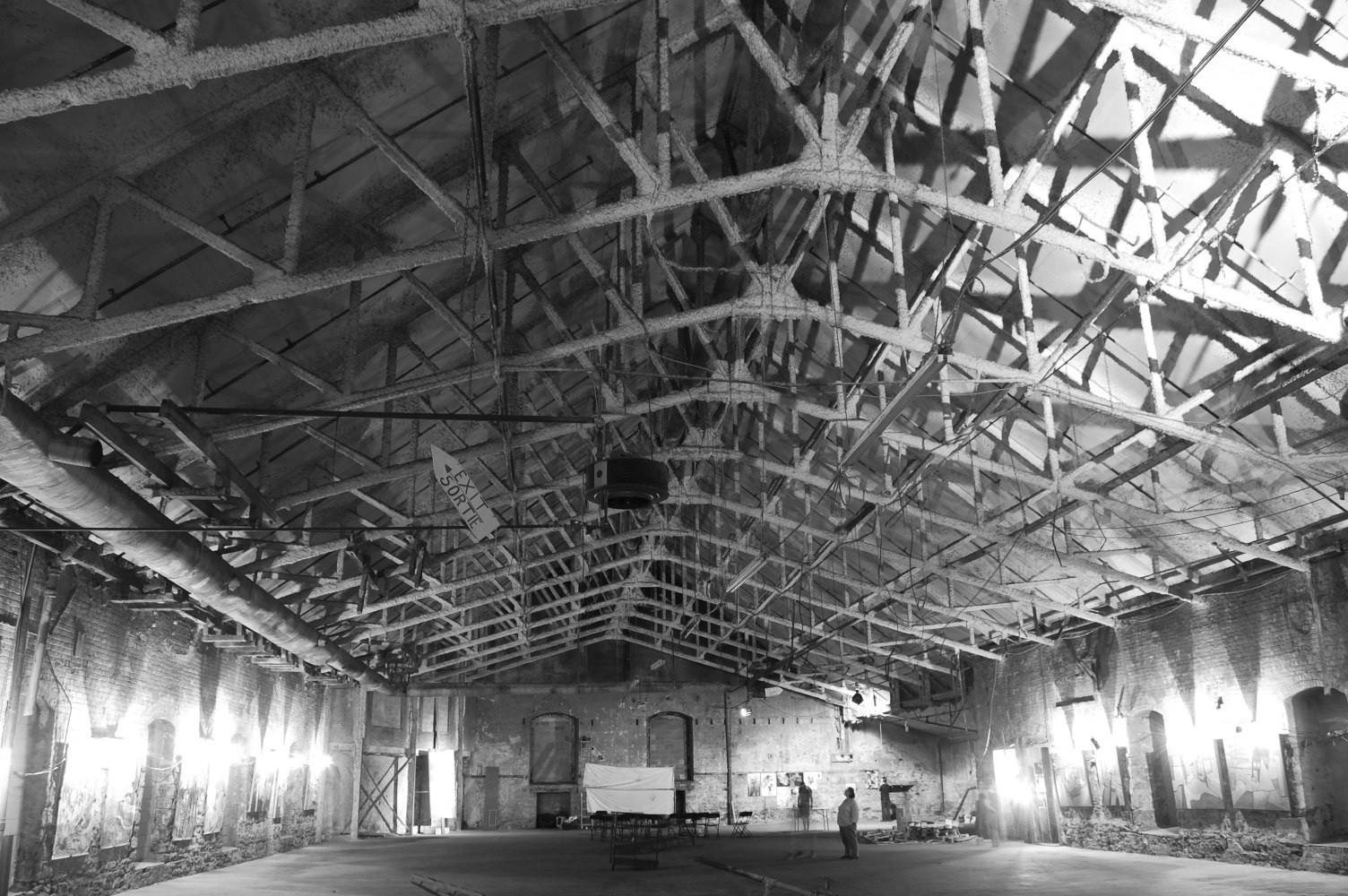
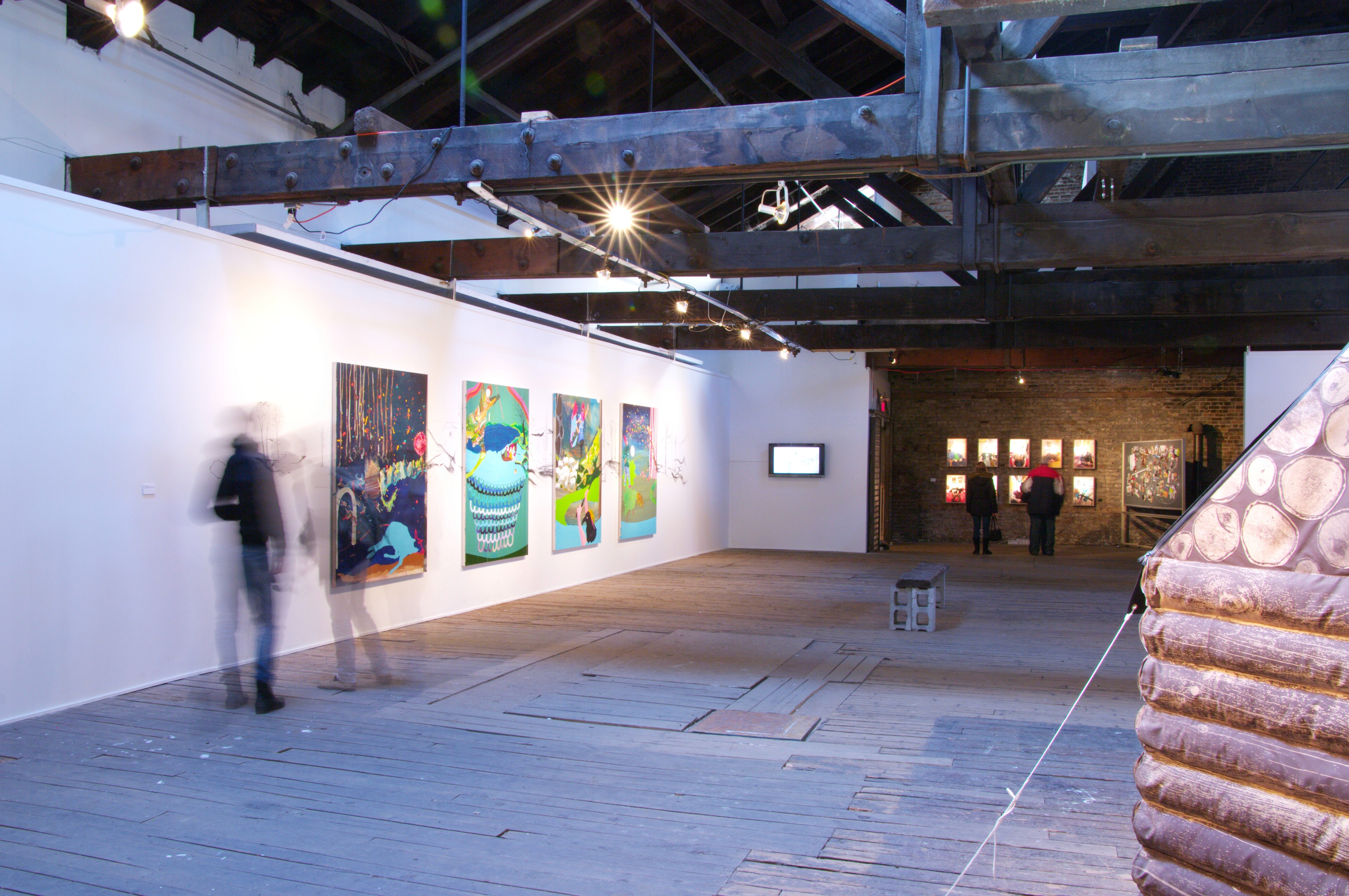
We scouted Griffintown until we found New City Gaz, a raw industrial space with no walls, no lighting, no infrastructure. We built the gallery inside it. Every partition, every light, every sightline was designed to serve the work and the dialogue between pieces.
— The Collective
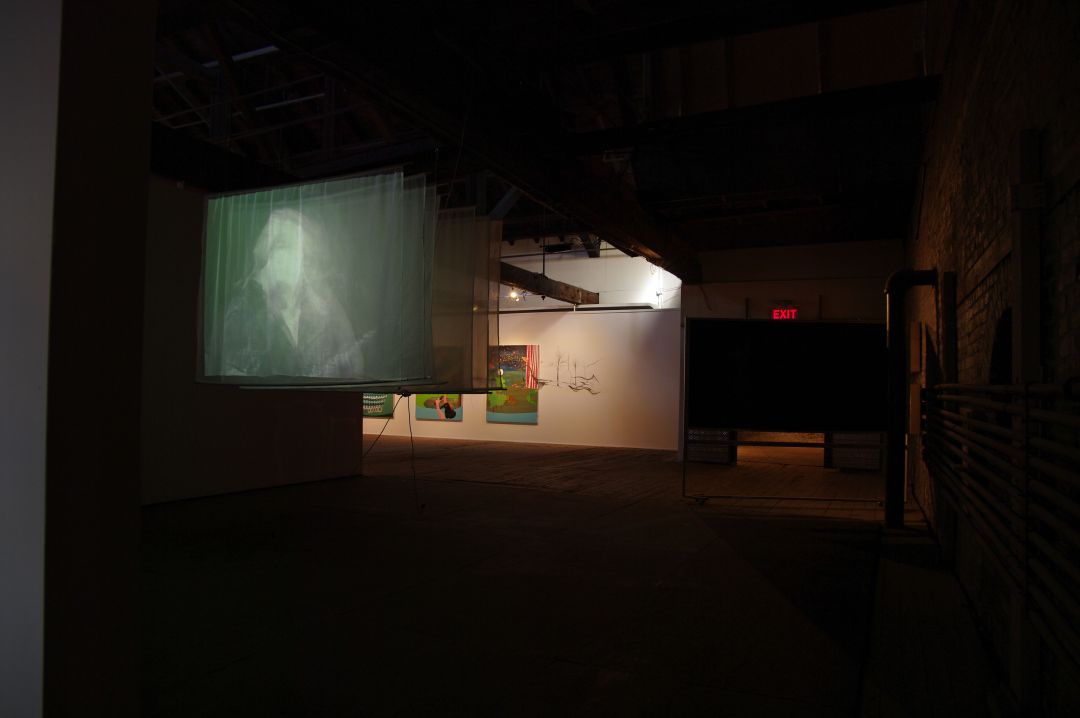
The exposition brought together emerging multidisciplinary artists — painters, sculptors, photographers, video artists, installation makers — into a single curated environment. We wrote the manifesto. We produced maquettes to visualize how each work would live in the space, how pieces would breathe beside each other.
The result was a collective statement: contemporary art doesn't need permission. It needs a place and a point of view.
The Process
From Raw Space to Living Gallery
01 —
Scouting
Walked Griffintown for weeks. Evaluated dozens of spaces for volume, light potential, and raw character. Found Gaz Town — an industrial shell with the bones to become something.
02 —
Building
Designed and constructed the gallery architecture from scratch. Walls, lighting rigs, circulation paths. Produced maquettes to test every spatial relationship before a single work was hung.
03 —
Curating
Selected and sequenced multidisciplinary works to create tension and dialogue. Wrote the exposition manifesto. Each placement was intentional — art in conversation, not just on display.
The Exposition
Inside Gaz Town
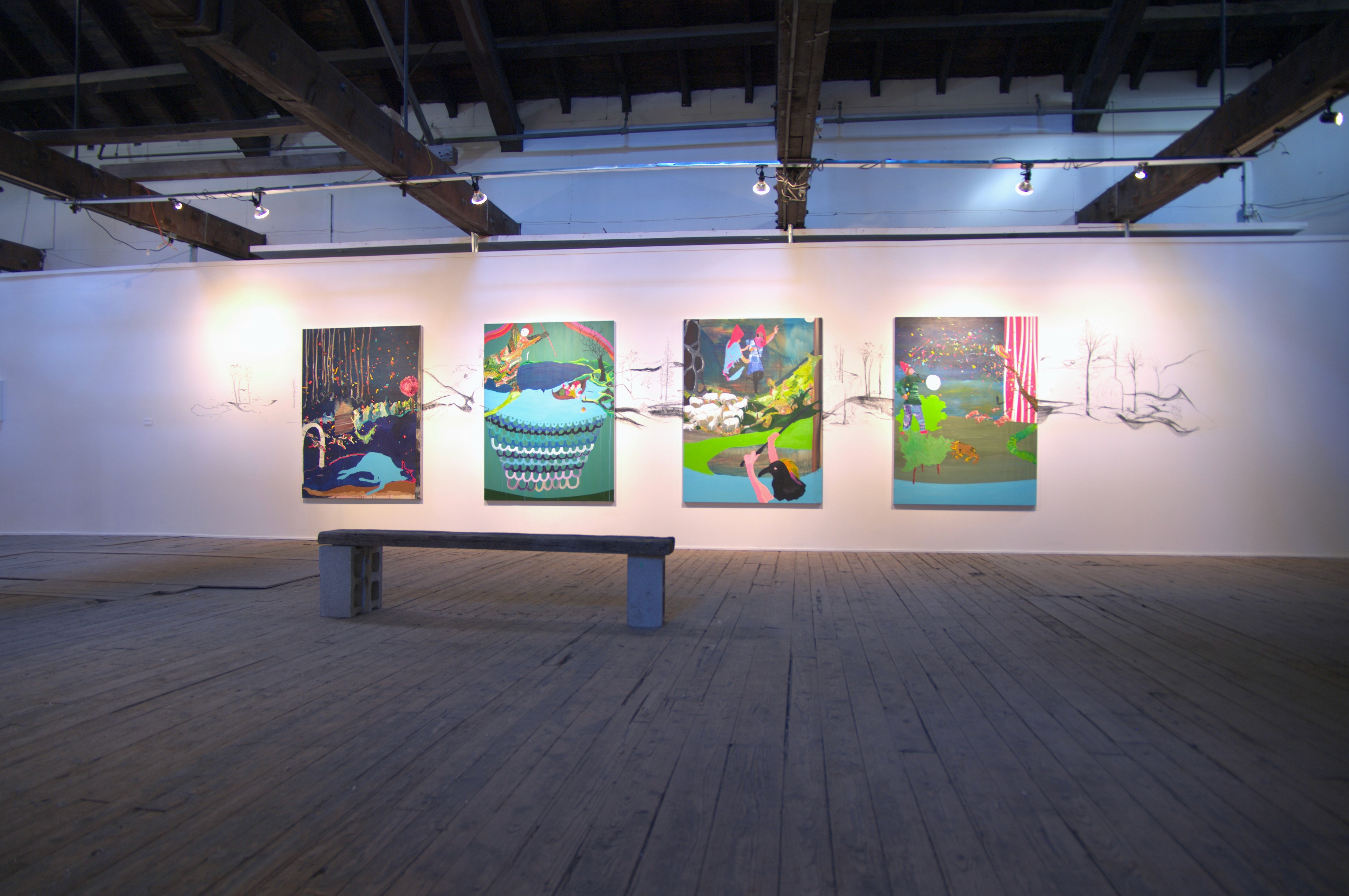
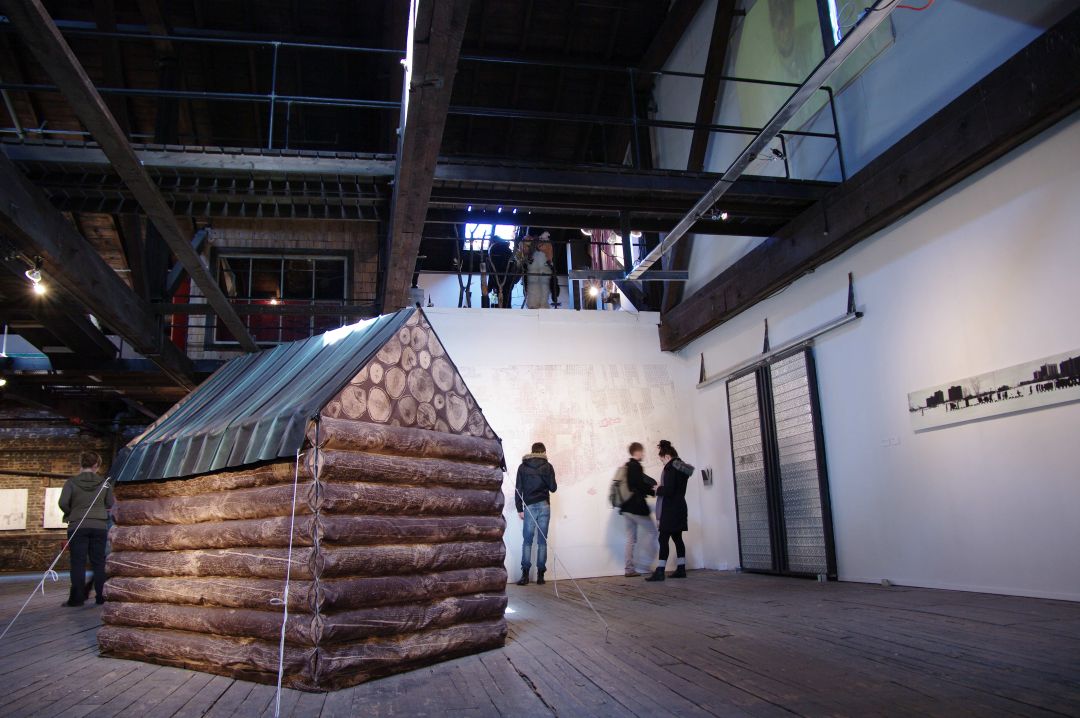
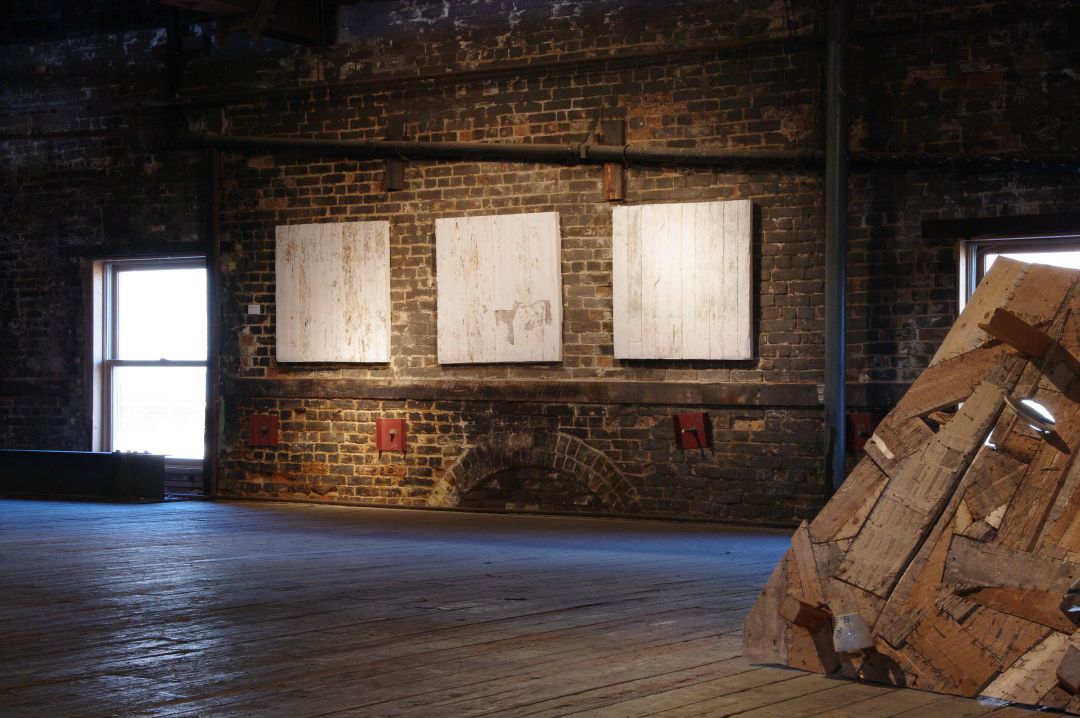
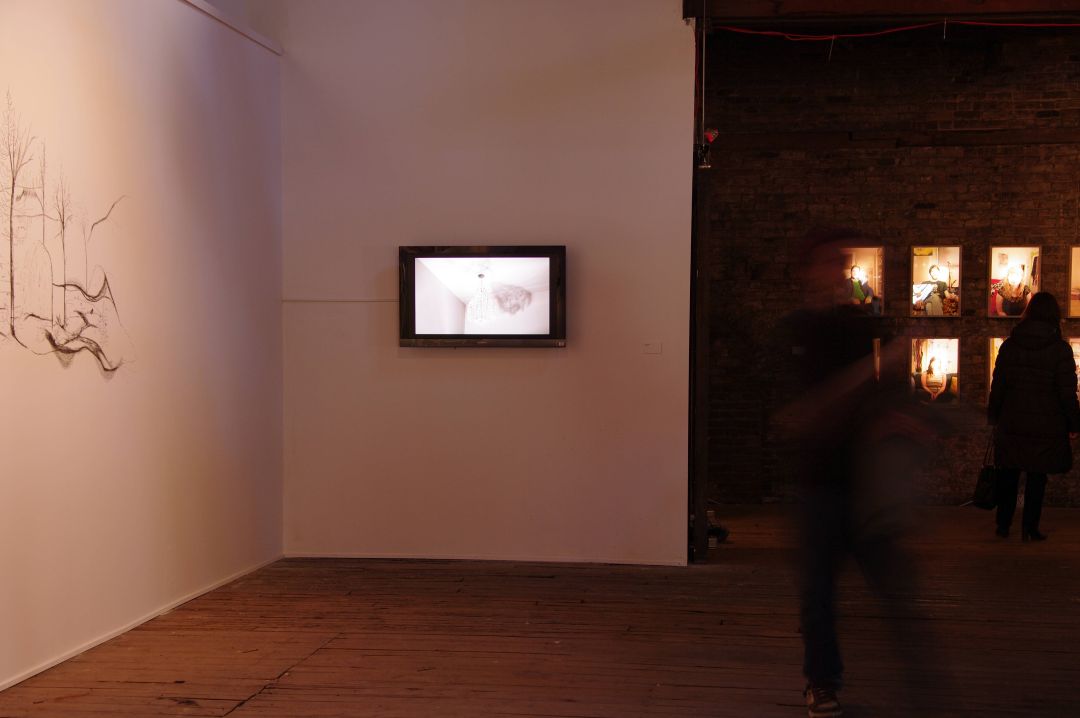

The Publication
Documenting the Tension
The exposition lived for a moment. The book makes it permanent. We produced a publication that captures not just the works but the spatial logic behind them — the manifesto, the maquettes, the curatorial decisions.
It functions as both archive and argument: a document of what happens when emerging artists are given a space built specifically for their voice.
More than a catalog, it is the intellectual trace of Entre Deux Feux — proof that the best creative direction doesn't just present work, it constructs the conditions for work to mean something.